How Directional Drilling Works in Valley Ground
The basin deck: alluvium, cobbles, caliche
The Valley floor is basin fill — alluvium shed off the surrounding mountains, sands and gravels interbedded with cobble runs and cemented into caliche and conglomerate layers that behave like rock because functionally they are. The deck changes over short distances: a bore can run clean alluvium for two hundred feet, glance through a cobble lens, and meet cemented ground before the exit stake. Local competence is naming that variability up front — ground classes priced separately, tooling staged for the transition, and probe or geotech data welcomed like the money-saver it is.
Heat is an engineering input
From June to September, the Valley's surface conditions move drilling into the margins of the day: dawn starts, night work where corridors permit it, hydration and rotation staffed as seriously as traffic control. Equipment feels it too — fluids, electronics, and cure times all behave differently at extreme temperature. A summer quote here carries the season in its production rates and its safety staffing; one that doesn't is quoting a different city.
The sequence, desert edition
Standard bones: 811 locates plus private designating, potholes on every crossing utility — including the irrigation infrastructure older neighborhoods still carry — pilot bore, reaming to roughly one and a half times product, pullback, restoration. Desert bends: water for the mud program is a logistics line, dust control runs to the county's PM-10 rules, abrasive-ground tooling wear is priced rather than mourned, and restoration matches surfaces from decomposed granite to turf without pretending they're the same.
Who owns what you're crossing
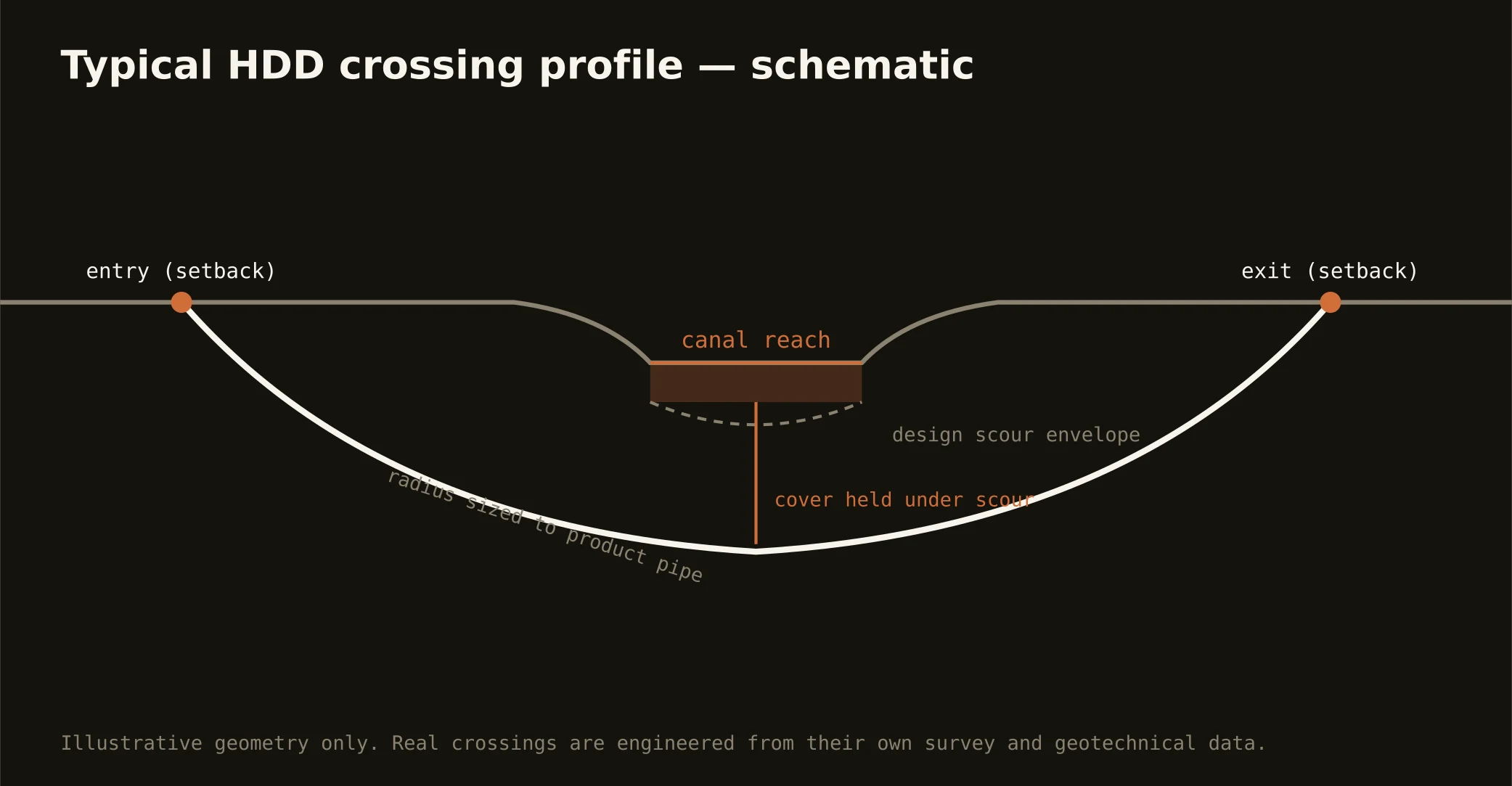
City streets carry municipal ROW permits across the Valley's two-dozen-plus cities; unincorporated roads run on the county DOT; the state system runs on ADOT's utility permit under its accommodation rules. The canal systems cross on their operating authorities' processes — engineering criteria, insurance, delivery-calendar scheduling, federal interest on the aqueduct. Railroads permit their own corridors through the industrial belts. The quote names every owner on your alignment, because each one is schedule and schedule is money.
Straight answers
Will you hit caliche or cobbles on my bore?
Plan on one or both somewhere — the basin deck nearly guarantees it. What matters is that the quote already said so: ground classes priced by reach, tooling staged, and cobble re-shoot economics stated. Probe or geotech data on the alignment turns the plan from cautious to precise.
How deep do bores run under Valley streets?
Cover follows the owning authority's standard — municipal, county, or ADOT accommodation rules — and sits below everything potholed on the alignment. Canal crossings run to the operating authority's criteria under the section. The bore plan states your number before mobilization.
Is drilling cheaper in winter?
Often, honestly — full-day production without heat protocols moves footage faster. If your schedule can choose its season, the quote will show the difference; if it can't, the summer plan is built to deliver anyway, on summer terms.
Ready to put a number on a real crossing? Send the scope — a person prices it.