Canal Crossings in the Valley
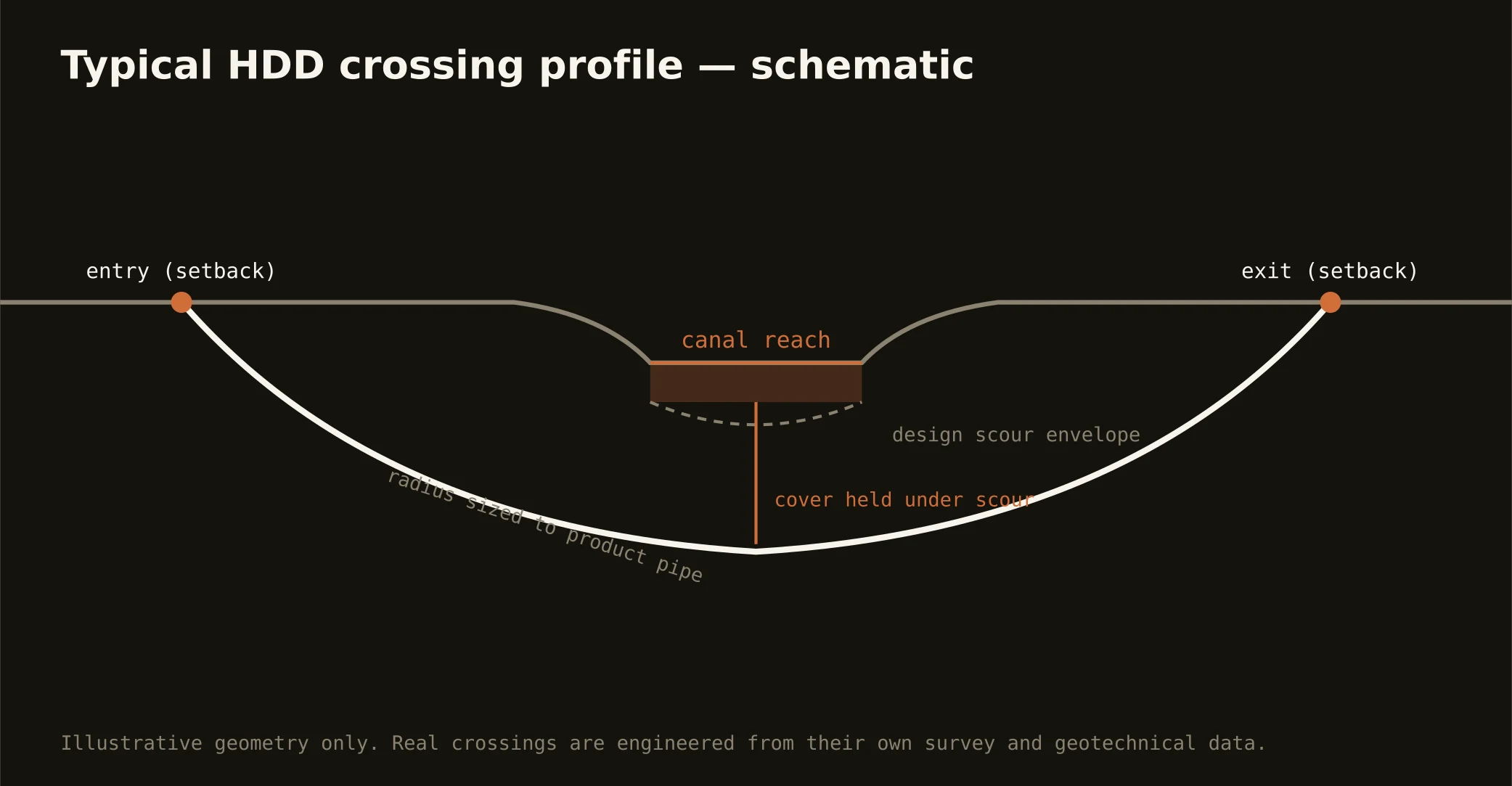
The Valley runs on open water in a desert: the historic delivery canals lacing the metro's core and the great aqueduct skirting its edge, moving the water that makes five million people possible. Utility routes cross them constantly, and crossing an operating water-delivery canal is the signature Valley bore — setback entry and exit clear of the canal right-of-way, a profile holding specified cover under the lined or unlined section, and absolutely nothing that threatens the flow or the embankment.
The permitting is the point: canal rights-of-way belong to their operating authorities, whose crossing processes come with engineering criteria, insurance, and scheduling around the delivery calendar — including the maintenance dry-ups when some work prefers to happen. Federal interest rides on the aqueduct system. Our quotes name the authority, carry its clock, and schedule to its calendar rather than ours.
Technically, canal crossings stack the Valley deck: cobble alluvium in the banks, caliche at depth, and fluid discipline sharpened by the fact that an inadvertent return into a delivery canal is a water-supply incident. Containment staged both banks, conservative pressures, written response plan — before the pilot starts.